Seasickness on board: how to limit it
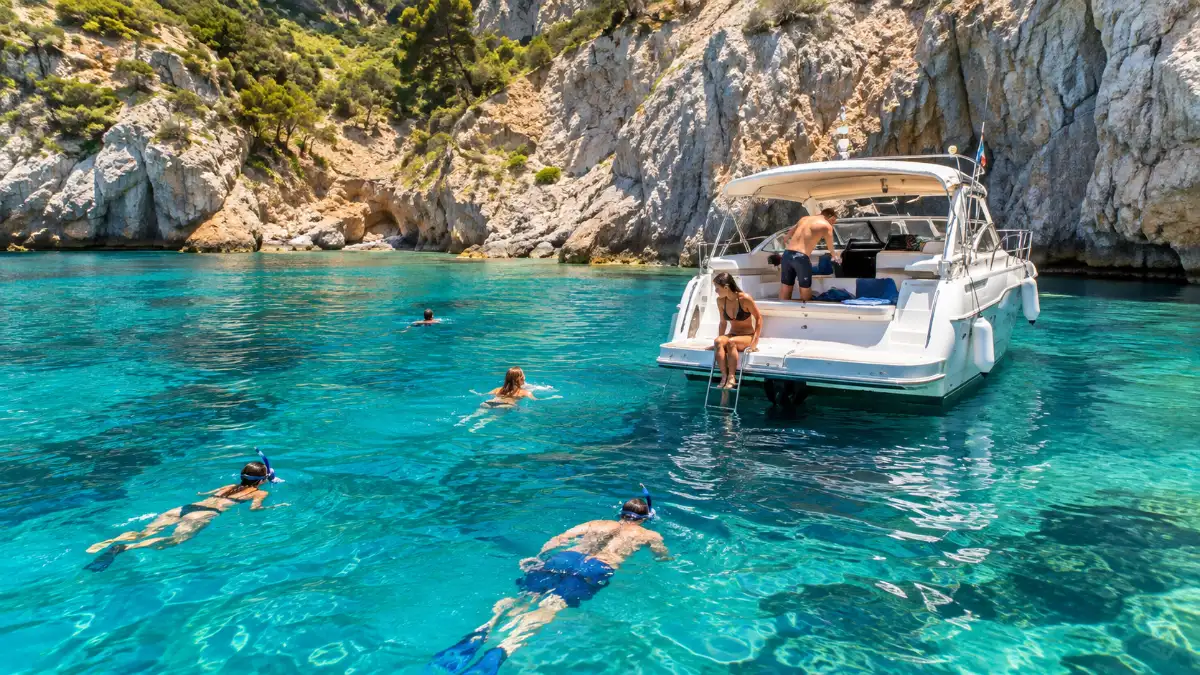
Where to sit
The motion increases the further you move from the centre of the hull: the bow rises and falls much more than mid-boat, and the upper deck sways more than the lower. The best spot is therefore central, low and open-air, seated and facing the direction of travel, with your gaze fixed on something steady: the coastline, the outline of the Faraglioni, or the horizon. Going below deck to stare at your phone is the quickest way to feel unwell.
Board early and choose your seat instead of taking whatever’s left. On small boats, the best spots are gone within the first two minutes of boarding.
The two sides of the island aren’t the same
A full circuit of Capri takes you from a sheltered side to an exposed one. The stretch towards Marina Grande and Marina Piccola is almost always the calmest; the open side, facing the Punta Carena lighthouse, catches the full force of the sea and you’ll feel it. When the wind picks up, that’s where the boat starts to pitch, and crews know it: as the waves build, they shorten that stretch—just as rough seas and Plan B explains. Knowing the order of the stops helps you prepare: the full list is in what you’ll see from the sea.
Which departures to choose
The earliest morning departures usually find calmer waters: the breeze builds through the day, and the afternoon is almost always choppier than the morning. The short island circuit from Molo 0 leaves every thirty minutes from 9:30 to 14:00, so the calm window exists—and books up: take the first slot, not the last. The same goes for the months—early April to mid-June and early September to mid-October are the periods locals recommend as best, and they’re explained in when to go.
Short circuit or full-day tour
If you’ve had issues in the past, the choice is simple: an hour and a half of sailing can be managed even in less-than-perfect seas, but eight hours cannot. The full-day trip from the mainland includes a sea transfer on the way out, stops, and about an hour’s return in the afternoon—the worst time slot. The comparison between the options is in how long the circuit lasts and in all tours compared; the most popular short circuit is described in the review of the grotto circuit.
One last thing, obvious but true: don’t board on an empty stomach, and don’t board after a heavy meal. With children, the short circuit is the default choice for this reason too, as boating with kids explains.
Frequently asked questions
Where’s the best spot on the boat if I get seasick?
In the centre of the hull, as low down as possible, in the open air and with your gaze on the horizon. Avoid the bow and below deck.
Is the sea calmer in the morning or the afternoon?
Usually in the morning: the breeze builds through the day. The short circuit leaves every thirty minutes from 9:30 to 14:00, so you can choose the earliest slot; see also when to go.
Is the island circuit or the full-day tour better?
If you’re prone to seasickness, opt for the island circuit: one or two hours instead of eight, and no return trip in the afternoon. Compare the durations in how long the circuit takes.
Rough seas—should you skip it?
If you suffer badly, yes: the full loop still runs, but the exposed side gets choppy. What happens when the sea picks up is explained in rough seas and Plan Bs.